

Interview with the founder
30 years of clinical experience and 20 years of development experience
A new standard for stomach cancer screening
What kind of company is Endoluminal Solutions?
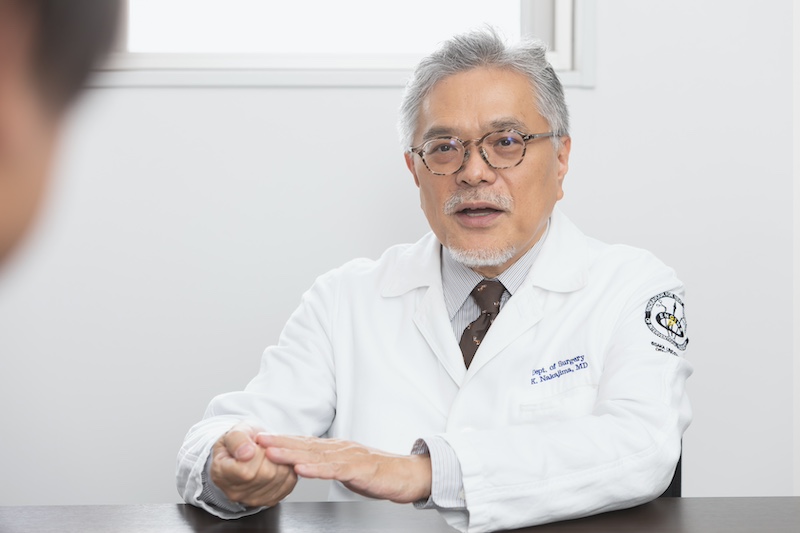
We are a medical device venture developing an innovative endoscopic system specialized for stomach cancer screening. We are a young company established in April 2025, but as the founder, I have 30 years of experience as a surgeon and 20 years as a medical device developer.
Gastric cancer screening in Japan is currently at a major turning point. The transition from barium tests, which have been used for over 50 years, to endoscopic examinations is beginning. However, there is a major problem that is preventing this transition from going smoothly: the endoscopes themselves. In fact, current endoscopes were developed for precision examinations, and are too high-performance to be suitable for large-scale screening. They are very expensive, complex to operate, and require cleaning, disinfection, and drying after each use, making them unsuitable for mass screening of many people at once.
That's why we are developing the world's first disposable endoscope (gastroscope) specifically designed for cancer screening. It's thinner (4mm) than any current endoscope, completely disposable, affordable, and simple to operate. We aim to make stomach cancer screening, currently performed by 24 million Japanese people, safer and more efficient.
Please tell us about your background as a representative.
I graduated from Osaka University School of Medicine in 1992 and have been working in the clinical field as a gastroenterological surgeon. Since 2001, I have been engaged in research in minimally invasive surgery at Cornell University in the United States, and after returning to Japan, I have been engaged in clinical practice, research, and education at Osaka University.
The turning point came in 2008, when we successfully performed the world's first gastric tumor removal using NOTES (transluminal endoscope surgery). This was a groundbreaking technology that allowed abdominal surgery to be performed using a flexible endoscope without injuring the body's surface. This success prompted me to begin full-scale research and development of medical devices.
In 2008, the research group "ENGINE" was established within the Department of Gastroenterological Surgery at Osaka University with the aim of developing innovative medical equipment required for minimally invasive diagnosis and treatment. This is an acronym for "Endeavour for Next Generation of INterventional Endoscopy," and expresses the determination to pioneer the field of next-generation minimally invasive treatment. In 2012, this group expanded and became independent as the Next Generation Endoscopic Therapeutics Joint Research Course. It has become a major platform for industry-academia collaboration, and over the past 13 years has conducted joint research with over 50 companies, bringing 28 products to market and filing over 160 patent applications.
Why start a business when you've had success at university?

I am certainly proud of the many accomplishments we have achieved at the university. Young surgeons and graduate students are free to engage in research and development, creating practical medical devices while earning their doctorates. Evidence is disseminated academically through conference presentations and published papers, and the products developed are spreading to medical settings across the country. ENGINE is, in effect, an open innovation R&D complex specializing in medical devices, and I am proud of the fact that it is a success story, like an "in-university" venture.
However, in my interactions with medical professionals overseas, I was constantly asked, "Why don't you start a venture?" In Europe and the United States, much of the innovation in medical device development comes from venture companies. In Japan, on the other hand, most of the work is done by universities and large corporations, and there are still very few successful examples of startups in the medical device field. As I reached the milestone age of 60, I thought, "Rather than staying cooped up in academia forever, perhaps it's time to use my experience and achievements to share what I believe in with the world at large." This was a major reason why I decided to start my own business.
Another major reason I decided to start my own business was the serious shortage of surgeons. Surgery is a field that requires advanced skills and a dedicated attitude, but the value and rewards of this work are not fully recognized among the younger generation, and fewer people are interested in becoming surgeons. I want to show young doctors that there are a variety of options and career paths available to them, not just the rewarding medical profession of clinical surgeon, but also research and development within universities and university-based start-ups.

Medical checkups that haven't changed in 50 years
Present a viable alternative
What are the current challenges in stomach cancer screening?
In Japan, approximately 60 million people aged 40 or older are eligible for stomach cancer screening, and approximately 24 million people actually undergo screening. Approximately 90% of these tests are barium tests. However, this testing method has remained essentially unchanged for over 50 years since the 1970s.
A barium test uses X-rays to project the shape of the stomach like a shadow puppet. This has the limitation that it is difficult to detect small or flat lesions. Furthermore, because X-rays are continuously emitted during the test, there are concerns about radiation exposure. Furthermore, barium sulfate, a heavy metal compound, is known to solidify in the body and cause problems if not properly excreted after the test.
Currently, the number of people undergoing barium examinations is decreasing year by year, and the importance of endoscopic examinations is rapidly increasing as a pillar of cancer screening in the future.
Why can't existing endoscopes solve this problem?
Modern endoscopes have evolved as tools for detailed examinations. As a result, they cost several million yen each, and are equipped with a variety of functions, such as ultra-high resolution and special light observation capabilities (I call these "monster endoscopes"). However, most of these functions are not necessary for screening. This is because the purpose of screening is to "accurately identify suspicious lesions," not to "make a precise diagnosis of cancer."
An even bigger problem is processing capacity. Endoscopes need to be cleaned, disinfected, and dried after use, and this downtime limits the number of examinations that can be performed per day. Furthermore, the high investment required in equipment limits the number of medical institutions that can perform screenings. Because of their high functionality, as mentioned above, they can only be used by doctors. In other words, current endoscopes are "ideal for individual detailed examinations, but unsuitable for large-scale screening (mass screening)."
On social media and YouTube, we are hearing people say, "Barium is useless, we should use an endoscope." However, it is irresponsible to just criticize without offering a viable alternative. Instead of criticizing, we will provide alternatives that can actually be used.
The world's thinnest diameter is realized
Innovative solutions specializing in screening
What are the features of the disposable endoscope currently under development?
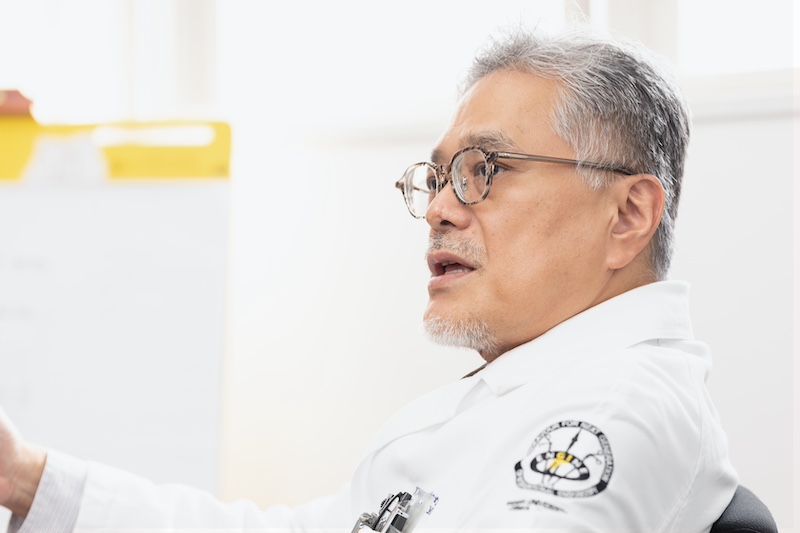
The greatest feature of the disposable endoscope (gastroscope) we are developing is its specialized design for screening. First of all, it has the world's thinnest diameter. Its thinness (4mm) is optimized for nasal insertion, and it is designed to be inserted effortlessly through the nose. Nasal endoscopes cause less gag reflex than endoscopes inserted through the mouth, significantly reducing the discomfort experienced by the patient.
Another major feature is that it is completely disposable. We aim to set a price that falls within the current personal cost of gastroscopy screening, and by making it completely disposable, we will be able to achieve safer and more efficient screening without increasing the financial burden on patients. There is no need for the processes of cleaning, disinfecting, and drying, so there is zero downtime. In other words, any number of people can be screened consecutively. At the same time, the costs of these processes are also zero.
We've also simplified operability. Conventional endoscopes can be operated in four directions (up, down, left, and right), but our product can only be operated up and down. However, we have demonstrated that it is fully capable of performing the observations required for medical examinations. Furthermore, the system is connected to a tablet-like device rather than a large endoscope tower, and an LED light source is located at the tip, eliminating the need for optical fibers or light sources.
Our endoscopes are "sterilized," a process that goes beyond the "disinfection" process currently used for endoscopes. They are individually packaged. This is a high-quality "special specification" that aims to reduce the risk of infection to as close to zero as possible.
These are not simplifications or downgrades of current endoscopes, but rather have been achieved through a method of "zero-based development" in which the functions necessary for cancer screening are built up from scratch.In addition, we are simultaneously developing a "diagnosis support system specialized for cancer screening" that utilizes the latest artificial intelligence (AI) technology.
Where did the idea for "zero-based development" come from?
"Zero-based development" is a development method that does not downgrade conventional endoscopes, but instead builds up from scratch only the functions necessary for screening. I learned this concept from a joint development project that has been underway since 2014 with the All India Institute of Medical Sciences (AIIMS).
In India, the power supply is unstable, clean water is limited, and air pollution causes dust to adhere to equipment. To develop medical equipment that can be used in such an environment, it was necessary to abandon the conventional wisdom of developed countries. For example, electrocardiograms would need to be battery-powered rather than relying on power from an outlet, and text would need to be displayed using language-independent pictograms.
What I learned from this experience is that much of the medical device development in developed countries is focused on added value (wants) that would be "convenient to have," and has strayed from "truly necessary functions" (needs). Products developed from scratch with an emerging country perspective can actually be of great value in developed countries as well. This is because even developed countries face situations where resources are limited, such as during disasters or when providing medical care in remote areas.
Please tell me more about the AI diagnostic support system.
The hardware is a combination of low-tech optimization and the software is cutting-edge technology. Our AI diagnostic system will be designed and developed specifically for cancer screening.
The diagnostic assistance AI currently used in medical settings has been developed using high-resolution images taken with current high-performance endoscopes as training data. We will use lower-resolution images from screening endoscopes as training data to train the AI, developing new software that can reliably identify suspicious lesions. We also aim to create a system that can automatically generate screening reports.
Furthermore, an innovative system unique to disposable endoscopes is that each endoscope is assigned a unique ID. Because one endoscope is only used by one patient, linking that ID to the patient's data makes it possible to completely track who underwent the examination, when, where, and with which endoscope. This reliable traceability ensures that notification of results to patients, provision of information when further testing is required, reports from the examination facility to local governments, and notifications for the next examination can all be automated without fail. In the future, we believe that the accumulated big data can be utilized to contribute to various epidemiological studies and to improving the accuracy of examinations.

Protecting the health of 24 million people
Towards building sustainable social infrastructure
What is your business model strategy?
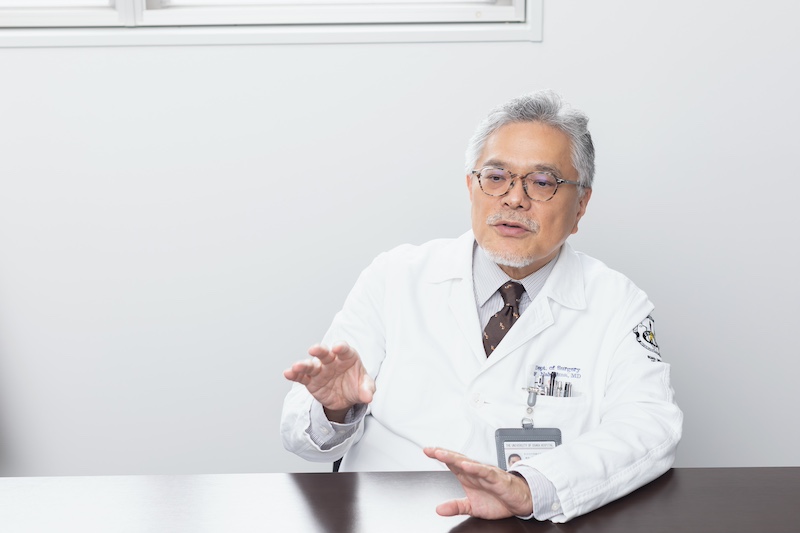
Our top priority is to enable as many people as possible to undergo stomach cancer screening with peace of mind. To that end, we are striving to set prices that are easy for medical institutions to implement and that place a low burden on patients.
This pricing allows medical institutions to introduce the device without a large initial investment, and keeps the out-of-pocket expenses for patients within a reasonable range.Unlike typical medical device manufacturers, we prioritize widespread adoption and plan to develop our business with reasonable profit margins.
With 24 million people eligible for screening in Japan, this is a sustainable business. With the ultimate goal of "eliminating barium stomach cancer screening from the world," we have adopted a strategy that emphasizes the creation of social value.
The Korean government has already recommended endoscopic cancer screening, with a 70% screening rate and a large target population of over 10 million. In the future, we hope to contribute to the spread of endoscopic cancer screening not only in Korea but throughout Asia as a screening system originating from Japan.
Furthermore, endoscopes are not widely used in low- and middle-income countries, including those in Africa. We believe that the endoscope we are developing will be the first endoscopy in these countries, and has the potential to be widely used for actual medical purposes rather than just for screening.
What is the roadmap to practical application?
We are currently working with a partner manufacturer to produce the first prototype. We will then continue to make improvements over the next year. After going through the process of applying for approval under the Pharmaceuticals and Medical Devices Act, we aim to launch the product on the market between 2029 and early 2030.
We would like to first introduce this system to public cancer screening centers. We have asked Dr. Katsuaki Kato, director of the Miyagi Cancer Association Cancer Screening Center, one of Japan's leading cancer screening institutions, and Professor Masashi Oka, a specialist in endoscopic cancer screening at the Department of Gastroenterology at Saitama Medical University, to serve as medical advisors, and they will be assisting us in evaluating the performance of the product we are developing and providing academic support.
Additionally, we hope to create a business model that is easy for small and medium-sized clinics that have difficulty making an initial investment to introduce, thereby expanding the range of facilities that offer endoscopic cancer screening.
From inside the organs (endoluminal)
Creating solutions
Please give a message to everyone who visits our website.
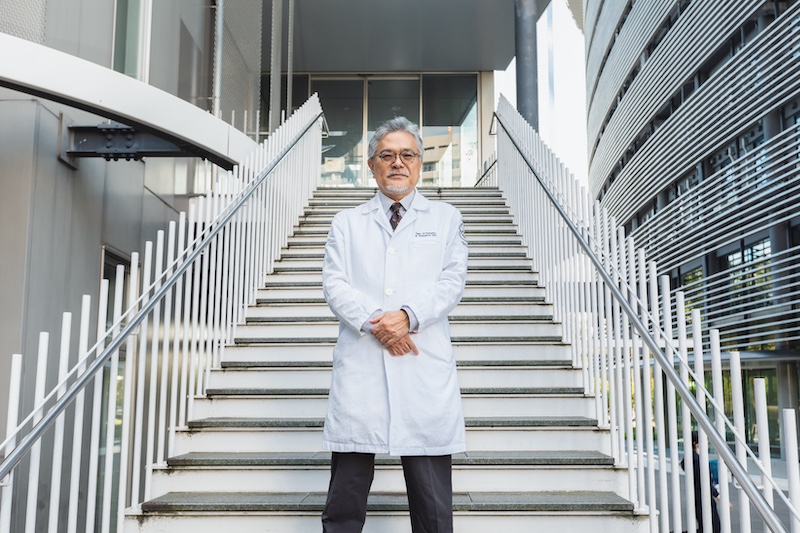
What we are developing is not just a medical device. It is a social infrastructure that will revolutionize Japan's stomach cancer screening system. There is a clear market of 24 million people, and a major trend has begun in which we are transitioning from barium to endoscopy.
As evidenced by our experience of bringing 28 university-based products to market and over 160 patent applications, we have the ability to reliably bring medical devices to market. Furthermore, our development experience in emerging countries has given us the know-how to identify true needs and provide them at reasonable prices.
In the medical world, it is easy to criticize, but it is not easy to present and implement viable alternatives. We do not criticize, but provide solutions. "Creating solutions from within the organs (endoluminal)" is the idea behind our company name.
While acknowledging the historical role that barium tests have played, we are building a screening system for a new era. That is our mission. We will transform Japanese medical care from within and expand it to the world. We hope you will support us in taking on this challenge.
New options for the future of surgeons
Clinical practice, research, and entrepreneurship - Diverse career paths make surgery more attractive
The looming crisis of a surgeon shortage

Surgery in Japan is currently at a critical crossroads. It is predicted that there will be a significant shortage of surgeons in the near future, and if things continue as they are, the Japanese surgical system itself may collapse.
Surgery is a field that requires a high level of expertise and a strong sense of mission, but its social value is currently not fully recognized. The development of an environment that matches the characteristics of surgery, which require long surgeries, emergency response, and continuous technical training, has not kept pace. Another issue is that when young doctors are choosing a career path from among the various medical specialties, the inherent appeal and potential of surgery is not fully communicated.
However, without surgeons, neither cancer surgery nor emergency medical care would be possible. To solve this structural problem, we need to increase the appeal of the field of surgery itself and offer diverse ways of working. This is another reason why I founded Endoluminal Solutions, Inc.
The path of medical device development that only a surgeon can take
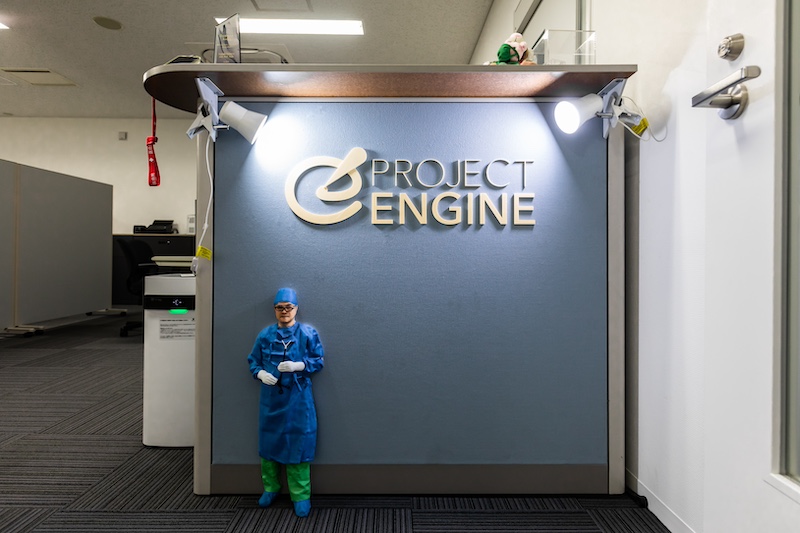
Our founder and representative, Seiichi Nakajima, has been a surgeon for 30 years, 20 of which have been involved in medical device development. Based on this experience, we can say with confidence that surgeons are the ones who can create innovative medical devices.
This is because the need for medical equipment is born in the operating room. Surgeons, who actually use their hands, interact with patients, and experience the challenges of the operating room firsthand, are the ones who can truly understand what medical equipment is needed. The starting point for everything is the desire in the operating room for something to be better.
The "ENGINE" project, which Nakajima launched at Osaka University, has conducted collaborative research with over 50 companies over 13 years, bringing 28 products to market. During this process, many young surgeons have participated in research and development, earning doctorates while creating practical medical devices. While honing their surgical skills, they have also acquired the skills of developers and received academic recognition through presentations at conferences and the writing of papers.
Entrepreneurship is a new option
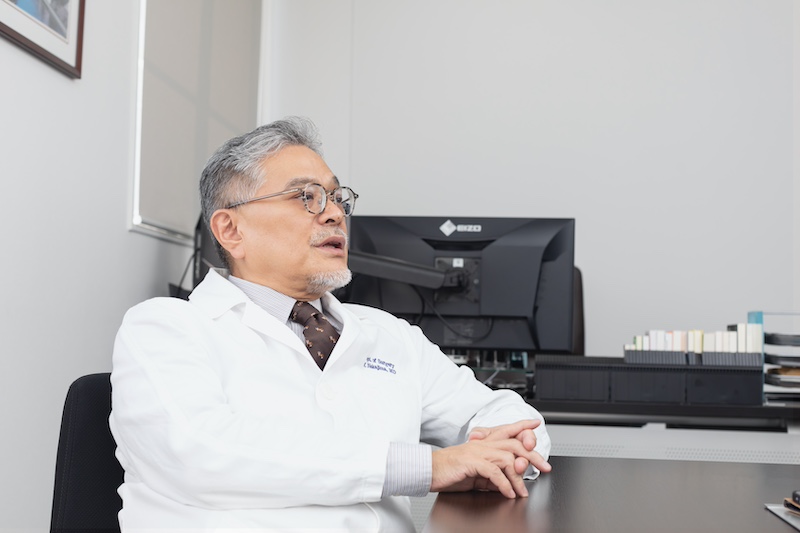
However, there are limitations to development at universities. It is difficult to tackle truly innovative and high-risk themes. Therefore, our company was founded to offer another option.
Overseas, many innovations in medical device development are born from venture companies. Doctors start their own companies, turn their ideas into reality, and take responsibility for implementing them in society. This is a way for surgeons to contribute to society in a different way than simply saving patients through surgery.
Starting a business certainly involves risk. However, the judgment, sense of responsibility, and above all, the sense of mission to "serve patients" that I have cultivated as a surgeon are great strengths for me as an entrepreneur. It is precisely because I am a surgeon who is intimately familiar with the medical field that I am able to create products that are truly needed.
Diversity makes surgery more appealing
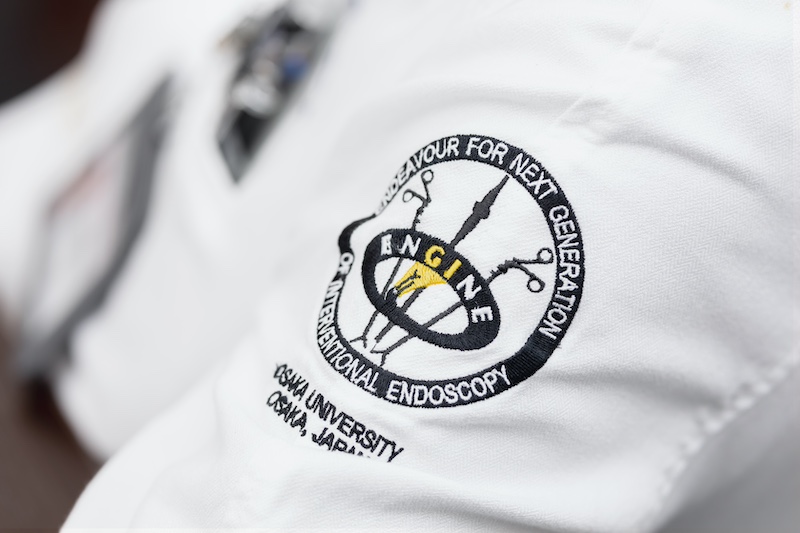
What we want to propose is not a binary choice of "surgeon or not." Clinical work, research and development, and entrepreneurship can all be part of a surgeon's career.
You could save patients in the operating room in the morning, develop new medical equipment in the afternoon, and train young doctors in the evening. Or, after devoting yourself to clinical practice for a few years, you could use the experience you've gained to become a medical equipment developer. Or, you could start your own business to realize your own ideas. If such diverse work styles became the norm, the field of surgery would surely become even more attractive.
In fact, some of the surgeons who have been trained through Project ENGINE have gone on to continue their research at universities, some to work in medical device development with companies, and some to start their own businesses. They are all active in their own fields while maintaining their identity as surgeons.
A message to the next generation
What we want to say to young doctors, especially those aspiring to become surgeons or considering leaving surgery, is that being a surgeon is a wonderful career with endless possibilities.
Whether it's directly saving lives through surgery, developing new medical equipment to help patients around the world, or starting your own business and revolutionizing the healthcare system itself, these are all things that only a surgeon can do. The path of a surgeon is by no means smooth, but the impact on society and the sense of accomplishment gained are all the more exceptional.
The success of Endoluminal Solutions Inc. is not simply the success of one company. It signifies our ability to demonstrate to society a new way of working for surgeons and a new form of value creation. We believe that our challenges will inspire the next generation of surgeons and brighten the future of the field of surgery.
Diversifying the ways surgeons work is the key to supporting the future of medical care in Japan.